services

E-Commerce · A Happy Cog vertical

Growth in E-Commerce isn’t one problem. We built one team to solve all of it.

Happy Cog is a full-service E-Commerce agency for DTC and enterprise brands, uniting storefront design, commerce development, Stripe payments, and disciplined paid media in one senior team.

Three practices, one team Design Development Digital marketing

We’ll reply within one business day. No sales sequence, no spam.

+27%
Blended ROAS on Google

Half-over-half, on roughly a quarter less spend, across the online-retail accounts we manage.

+42%
ROAS · DTC eyewear

With cost per acquisition down about 28% at a DTC eyewear brand.

+116%
Organic search visits

Year over year, for 39DollarGlasses through our SEO and paid program.

Brands we’ve worked with

A full-service E-Commerce agency trusted by DTC and enterprise brands.

39DollarGlasses
Juliska
Capital One
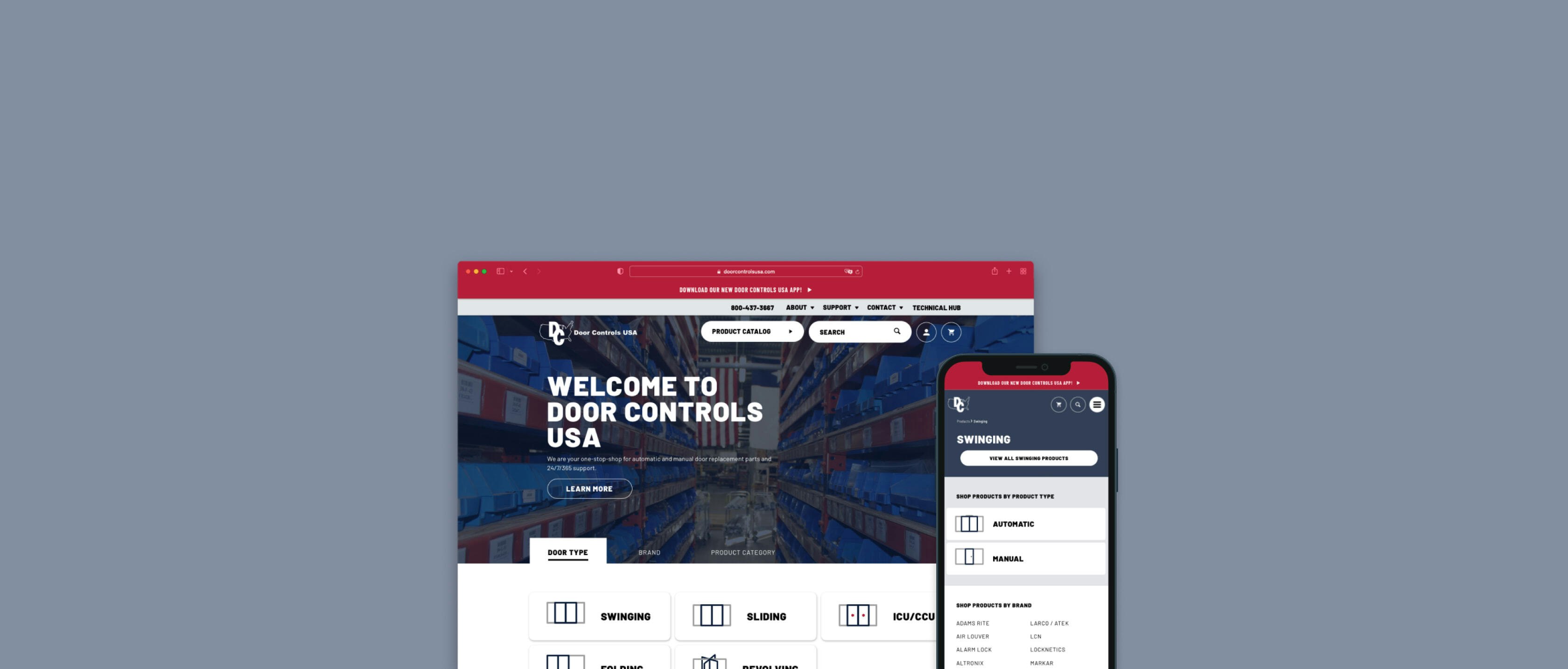
Door Controls USA
Morphe
Zappos
OXO
Twelve South

Design, commerce development, payments, and marketing for DTC and multi-channel retail, from scaling brands to global CPG and luxury.

The problems we solve

A few hard problems with no easy tools. We’ve spent years building the practice to solve them.

The same patterns show up across nearly every online-retail brand we work with past the $15 million mark. None of them is solved by a new buy button, an off-the-shelf app, or a bigger media budget, so we built a practice that works across all of them.


01

Discovery left the storefront

Your next customer may ask an AI where to buy before they ever open a browser.

A magnifying glass over a chat answer bubble with a product tag

Discovery used to start in search and end on your product page. Now it often starts in ChatGPT, in Google’s AI Overviews, in a social feed, or inside a shopping agent, sometimes before anyone types your name into Google. Being found now means your products are legible to the systems doing the recommending. We treat this as SEO for products, evolved rather than replaced. Complete and accurate structured data, clean feeds, genuinely useful content, and off-site authority strong enough that AI systems trust the brand are what decide whether an AI surfaces you. We’ve extended our SEO practice into answer-engine and agent readiness, because for a retailer the catalog and its data are the asset.


02

The platform runs your campaigns now

You hand Google and Meta your goals and your data, and their AI does the rest. Judgment and clean inputs are what’s left to you.

A bid gauge dial suggesting platform automation

Paid media has converged on one model. You provide products, data, and creative, and the platform’s automation handles targeting, bidding, and placement. That raises the value of two things rather than lowering it. The first is clean first-party data feeding the algorithms. The second is the discipline to judge each channel on incremental profit rather than the ROAS a platform reports about its own work. We run paid media as a precision tool, with people setting the guardrails. Brand and non-brand stay separate, platform recommendations get reviewed rather than auto-applied, and every channel answers for what it actually adds to gross profit.


03

Your storefront has a second audience

One reader is a shopper deciding whether to trust you. The other is a crawler deciding whether your products are legible enough to recommend.

A product page split between a human eye and a small crawler robot glyph

Design still does the selling, and speed still decides how much of it happens. But the store now answers to a reader that never sees the design. Strict semantic structure, accurate labeling, and complete structured data determine whether an agent can interpret your products, and a poorly built site quietly disqualifies itself from the fastest-growing surfaces in discovery. We build product and category pages that are fast, trustworthy, and semantically clean in a single pass, because the page that converts a shopper is increasingly the same page an AI can parse and cite.


Commerce development

Commerce engineering that holds up at scale, on the platform that actually fits your business.

Underneath the storefront, the work that lasts is unglamorous and hard to fake. We build platform-agnostically and recommend the technology that fits your catalog, your team, and your roadmap rather than the one we happen to prefer. Our developers work across Shopify, Craft Commerce, Webflow, Salesforce Commerce Cloud, NetSuite, and headless architectures, and we’ve built custom storefronts for global CPG and luxury brands where reliability and conversion matter more than fashion. We don’t outsource any of it. The team that architects your build is the team that runs it.

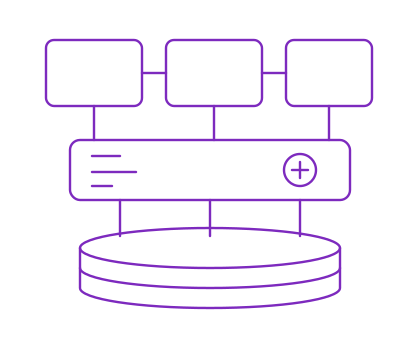
Connected modular commerce blocks sitting on a clean product-data layer

Platform expertise without bias

For most catalogs, a fast, well-tuned Shopify or Shopify Plus build is the right call. When a brand needs complex data modeling and custom integrations we reach for Craft Commerce, where we’re one of a small number of official Craft Service Partners. When a marketing team needs to launch without waiting on engineering, Webflow Enterprise earns its place. For enterprise operations, we build on Salesforce Commerce Cloud and integrate NetSuite, we support BigCommerce and Magento migrations, and we go headless where omnichannel delivery pays for the added complexity. We choose for Core Web Vitals and speed to ship, not for the trendiest stack.

Product data as core infrastructure

Your feeds and structured data now decide whether you appear in Shopping, in AI answers, and in agentic surfaces, and platforms will syndicate one catalog across all of them, but only as well as the underlying data is accurate. We build a single, clean source of truth for product data that can be syndicated anywhere, and we treat the catalog as the product it has quietly become rather than an SEO afterthought.

Precision migrations and replatforming

Moving an enterprise storefront is a high-stakes engineering job. We map complex server-side functionality to modern replacements, migrate historical data and SEO equity intact, and carry over your CRM, ERP, and marketing-automation integrations, all without disrupting revenue during the switch.

AI in the build, with people governing it

AI-assisted development is compressing build and QA cycles on our recent projects. It also moves the engineer’s job toward architecture, security, and performance governance, which is the part that keeps speed from turning into risk. In one modular commerce build for a global brand, that discipline produced a 140% increase in mobile conversions and a 32% lift in organic traffic.

When off-the-shelf can’t carry a brand, we’ve even built our own commerce platform. HappyFood is our purpose-built ordering platform for restaurant and multi-location brands, proof that we can engineer the hard parts of commerce end to end when a model needs it. See how HappyFood works →

Payments & Stripe

Payments engineered to keep the customer yours, from a Stripe Verified Partner.

Stripe Verified Partner

Payments are where the customer relationship is won or quietly handed away. We’re a Stripe Verified Partner with a team of more than 30 Stripe-experienced engineers and over 40 implementations across retail, hospitality, financial services, and beyond. We build custom payment flows, recurring billing and subscription engines, and in-person experiences that unify your online and physical sales, and we run complex processor migrations without disrupting revenue.

A credit card with a contactless tap wave and a small agent node off to the side

Payments, Billing, and Terminal

We architect checkout that goes well past the basics to support your business model, build subscription and recurring revenue with Stripe Billing, and unify digital and physical sales with Stripe Terminal, including Tap to Pay on iPhone and Android. For franchise, marketplace, and multi-entity structures, Stripe Connect routes funds correctly so every account settles the way it should.

Proven at enterprise scale

We’ve built a small-business payments app for a major US bank’s customers on Stripe Connect and Terminal, moved a leading law-school publisher from print to a digital subscription service on Stripe Billing, and engineered a custom Terminal point-of-sale with card-fingerprinting loyalty for a national restaurant chain. Across more than 40 implementations, the odds are good we’ve already solved a version of your problem.

Partnered with Stripe on the Agentic Commerce Suite

We partnered with Stripe on the launch of its Agentic Commerce Suite, which lets our clients sell on AI agents with minimal change to the systems they already run. Two capabilities matter most for a retailer. The first connects your product catalog directly to AI agents, so your products are discoverable the moment a shopper asks an assistant what to buy. The second accepts agentic payments while you stay the merchant of record, keeping control of payments, returns, and the customer data that makes every other channel work. As those surfaces mature, that combination is how you sell through agents without handing away the relationship.

Design, CRO & brand

A store people trust starts with design, not a theme with your logo on it.

Most online stores look alike because most of them run the same themes with a logo dropped on top. Your brand doesn’t look like everyone else’s, and your storefront shouldn’t either. Our designers build the whole experience to carry your brand from the first impression to the confirmation screen, and we design it to convert a shopper and to be read by a machine in the same build.

A wireframe of a product page with image, price and add-to-cart, next to a Core Web Vitals speed gauge

A brand that reads as yours the moment it loads

We build the visual system, identity, and interaction so the store feels considered and unmistakably yours, not a template with the colors swapped. For brands moving up-market, that brand work is often what lets you hold price and protect margin instead of competing on discount.

Checkouts and product pages built to convert

Checkout is where the order is won or lost. We cut the friction that drives abandonment with fewer steps, clearer pricing, saved payment, and one-tap reorder, and a flow that works as well under a thumb as it does on a laptop. Trust signals move up the page, real reviews, customer photos, and ratings, because honesty converts better than manufactured urgency. For the right categories, virtual try-on and in-room previews reduce purchase uncertainty and cut returns, which is a direct margin lever. Then we measure against real order data and keep tuning.

Speed is a revenue line

Core Web Vitals, especially INP, are now both a ranking baseline and a conversion baseline, and INP is the one most stores fail. We hold the build to it and treat speed as the cheapest conversion project most retailers still aren’t running.

Personalization, done pragmatically

The approach that works is to segment first and personalize second, using new versus returning, device, and cart value, rather than heavy personalization that slows the page and unsettles shoppers. We optimize revenue per visitor, conversion rate multiplied by average order value, rather than a blended conversion rate that scaling will always pull down.

Performance marketing

A great store doesn’t fill its own cart. The media program does that.

A rising ROAS line, a constellation of connected programmatic nodes, and a target bullseye

Our digital marketing practice rests on three pillars: SEO and answer-engine optimization, paid media, and attribution. Paid media is the largest of the three. We’ve run performance programs for DTC and multi-channel retail across search, shopping, social, and programmatic, and our new business comes almost entirely from client referrals, which tells you most of what you need to know about how these engagements go. The work is research-led and results-driven. We start by understanding your economics and your true-north KPI, whether that’s new-customer acquisition, gross profit dollars, or blended ROAS, and we build the account to optimize for it rather than for the platform’s defaults. Our job is to accelerate the channels that are already working and make the whole program more efficient, so growth costs you less as you scale rather than more.

The AI here is real, and it’s been running since 2013. Our proprietary bid and budget technology moves money cross-channel and cross-device as often as every 30 minutes, calibrated against your real store economics: margin by SKU, inventory on hand, new-versus-returning customer value, and gross profit per order, rather than the platform’s defaults. It reads straight from your Shopify feed, leans into the products and audiences actually earning profit, and pulls spend back from the SKUs quietly burning it through a seasonal peak or a stockout. Across the online-retail accounts we manage, that discipline improved blended return on ad spend on Google roughly 27% half-over-half on about a quarter less spend, and in one DTC eyewear account it lifted ROAS about 42% while cutting cost per acquisition roughly 28%.

Paid Search & Shopping

Google and Microsoft campaigns structured the way retail actually converts: brand and non-brand kept separate, tightly themed ad groups, and responsive ads tested continually. Shopping is organized by product performance and fed clean margin data from Shopify, so campaigns optimize toward gross profit, not just revenue. We adopt Performance Max deliberately, with brand exclusions and value-based bidding, then test it for true incrementality rather than letting it cannibalize terms you already own.

Programmatic, CTV & OLV

We hold seats on every major DSP, including The Trade Desk, Yahoo DSP, Simpli.fi, Illumin, MNTN, and DV360, and invoice spend directly so you skip a licensing fee per platform. Display, video, CTV, audio, and DOOH run for both prospecting and retargeting, using contextual targeting, geofencing, curated audiences, and lookalikes built from your own data. We judge these on incrementality, not last-click ROAS, because programmatic carries the upper and middle funnel that search and social get credit for.

Paid Social & Commerce Media

Meta and Pinterest built on specific, tested audiences and first-party segments rather than full automation on day one. Once bidding is automated, creative becomes the main lever, so we test it continually across formats. Social commerce and retail media enter where the margin math works, with incrementality tested rather than assumed, so participation never turns into dependence.

AEO, SEO & GEO

Product and category SEO, complete structured data, and clean feeds, extended into answer-engine and agent readiness so you surface in ChatGPT, Google AI Mode, Perplexity, Copilot, and Claude. We instrument AI-referred traffic now, while the volume is still small, because the trajectory is the reason to start early rather than after it matters.

Retention, Email & SMS

Retention is where a growth-stage retailer’s margin actually lives, so we treat it as core to the media program. As a top-tier Klaviyo partner, we handle both sides: implementation and migration on the technical side, day-to-day lifecycle marketing on the strategy side. That means clean list building, real segmentation, and automated email and SMS flows that turn first purchases into repeat ones. With roughly 60% of DTC revenue coming from returning customers, this is often the fastest profit in the business, and we build it before we ask you to spend more on acquisition.

First-Party Data & Attribution

Your first-party data is the one asset the platforms can’t take back, and it sharpens every paid channel. We match your CRM and Klaviyo audiences to real users for lookalike and predictive models, suppress existing customers so prospecting stays focused on new acquisition, and reactivate lapsed buyers. Through Klaviyo we activate that data securely across the ad platforms, programmatic, and CTV, so the audience you own can power channels that used to be out of reach for precise targeting. Attribution is tuned per client and integrated with GA4 and GTM, with lead-quality and offline-conversion feedback wired back so bids optimize toward the customers worth keeping rather than the cheapest clicks.

Reporting & Partnership

Weekly performance reporting and monthly strategy reviews, with every platform consolidated into one view you can pull in near real time. Our Premier Partner status with the major ad networks gets clients early access to alphas and betas, and we reserve a small share of budget for disciplined testing that feeds the evergreen program. No black boxes. You see what we see.


Platforms & partners

The platforms we build on, buy through, and answer to.

From storefront and payments to the ad platforms, the DSPs, and the AI surfaces where discovery is moving. Two of these are named partnerships we’ve earned.

AI in production since 2013

We’ve been running AI in paid media since 2013. The rest of our practice caught up.

When the industry started calling AI a marketing differentiator, our paid media team had already been running it in production for over a decade. That isn’t a positioning claim. It’s the date we integrated machine learning into bid and budget management. Today AI runs through every discipline we practice: reasoning through features before we build them in development, moving bids and budgets in real time in media, testing storefront flows against real behavior in design, and keeping product data clean and syndicated across surfaces. The People First part is deliberate. Our clients aren’t hiring an AI vendor. They’re hiring a senior, opinionated team that uses AI to do more, faster, with better judgment. The human expertise is the difference. AI is the multiplier.

2013
AI in paid media

The year we integrated machine learning into bid and budget management.

30 min
Optimization cadence

How often our system reacts to live auction behavior across every channel.

0
Black boxes

Every decision our system makes is visible. You see what we see.

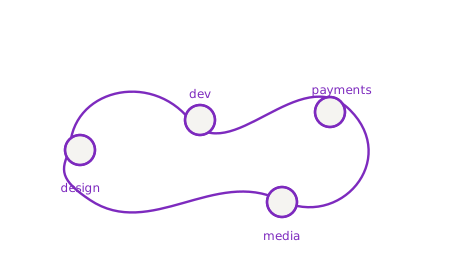
A single continuous line weaving four labeled nodes: design, development, payments, and media
One team

Designers who know the media program. Developers who know the product feed and the payment stack. One team.

When your design, development, payments, and marketing teams are the same team, the problems that fall between them stop falling. The campaign lands on a storefront the same people designed and built. The product data that makes you legible to an AI answer is the same data feeding your Shopping and programmatic. The first-party audiences you build in Klaviyo sharpen the paid media the same team runs. The payment rails that keep you the merchant of record connect to the analytics measuring every channel. We don’t outsource the work, so the senior people you meet in the first conversation are the ones doing it. That integration is what lets us act as an accelerator, moving faster on what’s working and squeezing more out of every dollar, because nothing gets lost in a handoff between vendors.

Start a conversation

Running a growth-stage online retail brand? We’d like to hear what you’re solving for.

Maybe you’re replatforming the storefront, cleaning up product data before the next AI surface matters, rethinking payments, restructuring paid media, or working out where AI actually fits in your stack. Start with a 30-minute conversation with the people who’d do the work, not a sales team.

“Partnering with Happy Cog completely transformed our marketing strategy. For the first time, we could clearly see how every dollar spent on paid ads connected to real business growth. Their data-driven approach and transparency set them apart — they don’t just run ads, they drive results and accelerate our business.”
Ingmar Korstanje Ingmar Korstanje
President, Marlo Beauty Supply
Free E-Commerce assessment

Tell us what you’re solving for.

Loading form…

We’ll reply within one business day. No sales sequence, no spam.

Talk to the team that’d do the work. Start a conversation