services

B2B · A Happy Cog vertical

Marketing shouldn’t hand leads to sales and hope for the best.
One team on the site, the campaigns, and the CRM, from first page view to the deal your CFO recognizes.

Happy Cog is a full-service B2B agency, and our designers, engineers, and demand generation team work as one group. That is why the ad lands on a page we designed, the form writes to a CRM we configured, and the model that decides what counts as a qualified lead was built by the same people who read the report on Monday. We have been doing this work since 1999.

Three practices, one team Design Engineering Commerce Demand generation

We’ll reply within one business day. No sales sequence, no spam.

DESIGN ENGINEERING COMMERCE PIPELINE
2×
Annual lead volume

Doubled at a global digital services consultancy in the first year of the engagement.

52%
Lower cost per qualified lead

Down from roughly $145 to roughly $70 across every digital channel at that same firm.

60%
Past the stretch revenue goal

Marketing-sourced revenue finished 60% beyond the stretch target, and the annual goal was met in July.

Organizations we’ve worked with

A B2B agency trusted by consultancies, life sciences manufacturers, technology platforms, and global brands.

Design, engineering, commerce, and demand generation across professional services, industrial and life sciences, technology, financial services, and franchise development.

What we optimize for

Conversions are the easiest number to move and the least useful one to report.

Every B2B marketer has sat through this meeting. The dashboard looks better than it did last quarter, cost per lead is down, the chart points the right way, and then someone from sales says the leads are garbage. Both people are reading real data. The trouble is that a form fill is the opening move in a B2B purchase rather than the end of one, so a number built on form fills can keep improving while nothing downstream of it changes at all.

We build against the metrics your CFO already recognizes. That can sound like a reporting preference, but it works more like an engineering constraint, because it changes what gets built and in what order. A keyword producing a hundred leads a month at a ten dollar cost per lead is not efficient if none of those leads ever reaches a sales conversation, and no ad platform will ever tell you that. Only your CRM knows, and it only knows if somebody wired it to know.

Marketing qualified leads Sales qualified leads Opportunities Pipeline Closed-won revenue

The bidding consequence is the part most programs never get around to fixing. An algorithm told to find people who submit forms will go and find people who submit forms, and it will get very good at it.

Give that same algorithm qualified pipeline instead and it goes looking for buyers.

Everything else on this page exists to make that switch possible.

The problems we solve

Four places B2B programs break. Not one of them is fixed by a bigger budget.

These four patterns show up in nearly every B2B account we inherit, at every size, in every industry. They compound, which is why fixing one and leaving the other three tends to produce a better dashboard and the same pipeline.

01

The feedback loop never closes

Your CRM knows which leads became revenue. Your ad platforms never find out.

Somewhere between the form and the invoice the connection breaks, and everything past that break becomes guesswork: which channel earned the credit, which keyword deserves the budget, and whether the bid strategy is hunting for customers or for people who enjoy filling out forms. Reconnecting the two ends is unglamorous engineering, and it is almost always the highest-return work available to a B2B program.

02

Every lead arrives weighing the same

A student writing a paper and a director at a target account land in the same queue.

With no scoring model, sales works the list in the order it arrived and fairly quickly stops trusting it. Once the queue loses credibility the follow-up slows down, the good leads cool off, and marketing takes the blame for something that began as a data problem. Scoring fixes it, and it only holds if the sales team helped write the rules.

03

The buying committee is invisible

Six to ten people decide. Lead-based measurement sees one of them.

Enterprise purchases get made by groups, and the person who downloaded the whitepaper is often the most junior voice in the room. Measuring at the account level rather than the contact level changes the targeting, the content, the scoring, and the reporting all at once. It is a measurement decision first and a software decision second, which is the opposite of how it usually gets sold.

04

The platforms were built for a faster sale

Google Ads was designed around a purchase that completes inside one session.

B2B cycles run six to eighteen months across many sessions, many devices, and many people. Google, Microsoft, LinkedIn, and the DSPs all perform well in B2B, but only once the conversion actions, the bidding inputs, the audience layers, and the exclusions have been rebuilt around a sale that takes a year to close. Most accounts we take over have never had that done.

Design & experience

A committee is reading your site, and one of them is paid to say no.

B2B design gets treated as the quieter cousin of consumer design, which has it backwards, because the stakes are higher and the audience is harder to move. The person evaluating your site is assembling an internal case, and what they need is proof, specificity, and enough credibility to defend a recommendation to a CFO and a procurement team. Manufactured urgency does the opposite of working here. Our designers have built brand systems, design systems, and full product experiences for consultancies, life sciences manufacturers, and technology platforms, and the craft that goes into a consumer launch goes just as readily into a specification page nobody outside the industry will ever read.

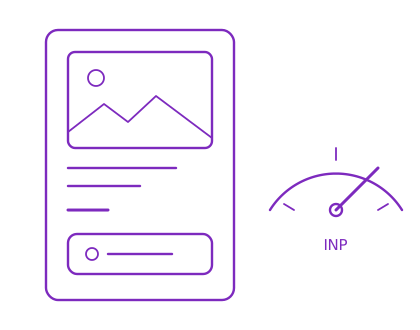
A wireframe of a page laid out beside a performance gauge

A brand that holds its price

The visual system, identity, and interaction should make the company look like the one you hire when the decision matters. For firms moving up-market, brand work is frequently what lets you hold rate rather than compete on discount, which makes it among the cheapest forms of margin protection available.

Content written for the whole committee

The economic buyer, the technical evaluator, and the person who will use the thing every day each need something different, and one page written to satisfy all three satisfies none of them. We design the routes separately and let each reader find their own.

Forms are a conversion decision

Every field you add improves lead quality and reduces lead volume, and the right trade depends on your sales capacity rather than on a best practice someone published. Progressive profiling settles most of the argument by asking for less up front and enriching the record afterward.

Accessibility that survives procurement

WCAG conformance turns up in enterprise RFPs, public sector requirements, and increasingly in vendor security reviews. We have been doing accessibility work since long before it became a compliance question, our expertise predates ADA Title II, and it is one of the reasons clients in regulated industries stay with us.

Engineering

The site is where the entire program lands. It should be built like infrastructure.

WordPress VIP Premier Partner

We are platform agnostic, and we recommend what fits your catalog, your team, and your roadmap rather than what we happen to enjoy building. Our engineers work across Craft CMS, WordPress VIP where we are a Premier Partner, Laravel, Next.js, Shopify, and Webflow, and we build custom applications, portals, and integrations for the cases where the product experience and the marketing site are the same surface. None of it is outsourced, so the team that architects your build is the team that runs it afterward.

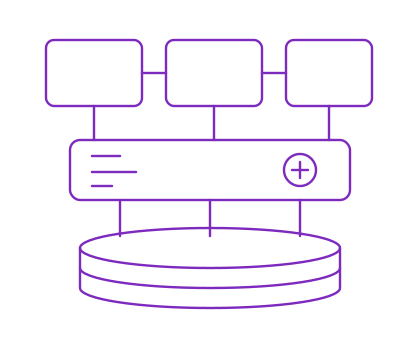
Connected modular blocks sitting on a clean data layer

Marketing teams that ship without a ticket

Component libraries and a CMS workflow built so your team can launch a campaign page, revise hero messaging, or publish a case study without waiting on an engineering release. Every week a page sits behind a deploy is a week you cannot test anything, and the compounding cost of that is larger than most teams estimate.

Integration engineering across the stack

Salesforce, HubSpot, Pardot, Marketo, NetSuite, and whatever ERP sits behind them. We move data between systems that were never designed to speak to each other, and we build the middleware ourselves when no connector exists.

Tracking architecture that holds up

Server-side tag management, consent mode, dataLayer specification, and GA4 implementations built to survive a cookie policy change, a consent banner rollout, and a browser update. This is where most B2B measurement quietly fails, and it is a large share of what our analytics team does every day.

Speed as both a ranking and a conversion baseline

Core Web Vitals, and Interaction to Next Paint in particular, decide how you rank and how much of your traffic converts. We hold builds to those numbers during the build rather than discovering them in a Lighthouse report a month after launch.

B2B commerce

B2B buyers now expect a consumer storefront with a contract underneath it.

Stripe Verified Partner

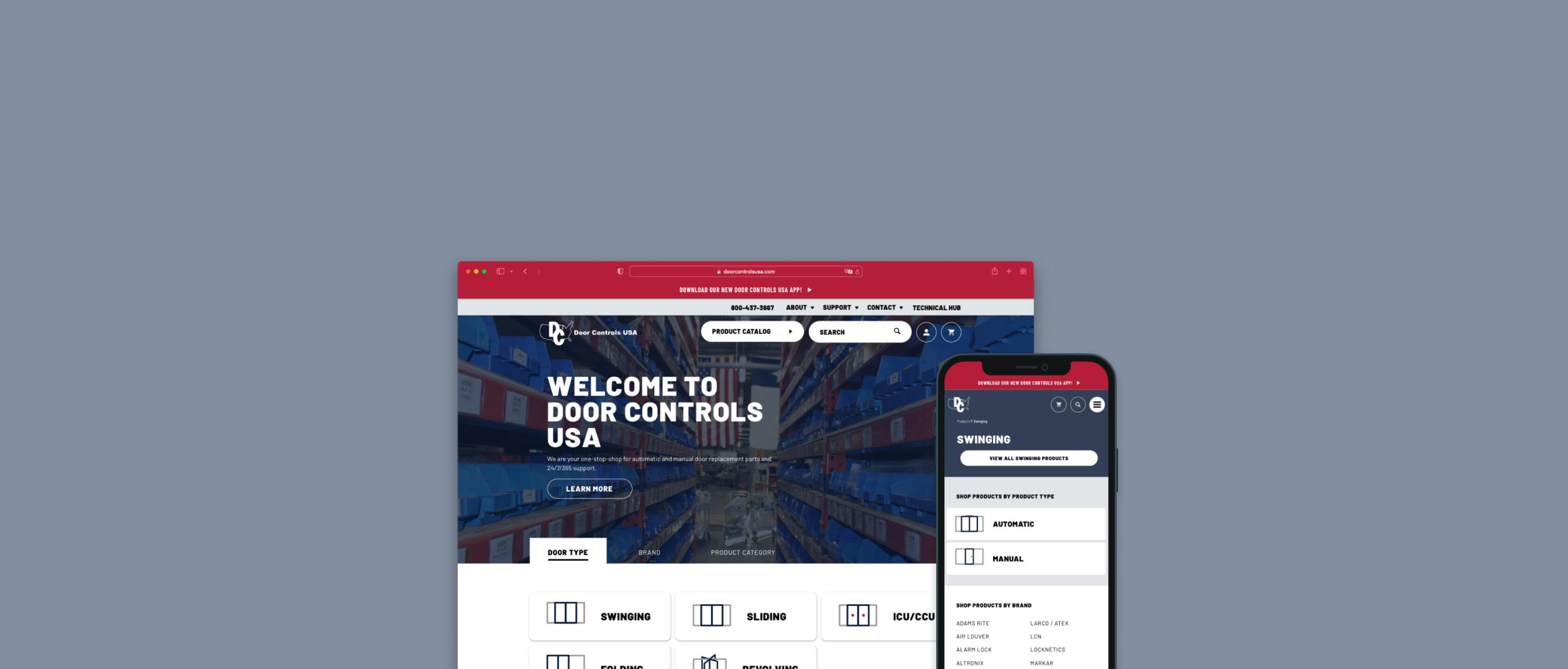
Selling to businesses online carries every requirement of consumer commerce plus a set that consumer commerce never has to solve: negotiated pricing by account, quote and approval workflows, purchase orders and net terms, reorder from order history, distributor and dealer portals, tax exemption handling, and a catalog running to tens of thousands of configurable SKUs. We have built this. For one of the largest industrial door parts retailers in the United States we built a Craft Commerce storefront alongside a React Native technician application synced live to their ERP, so catalog, pricing, and order status stay current for someone standing in a mechanical room with a phone.

Payments are where a B2B sale either stays clean or turns into an accounts receivable problem. We are a Stripe Verified Partner with more than thirty Stripe-experienced engineers and over forty implementations behind us, which is why Connect for multi-entity fund routing, Billing for subscriptions and recurring contracts, and Terminal for in-person and field sales are things we engineer rather than things we switch on. If you sell direct to consumers as well, our E-Commerce practice is the same team.

A payment card with a contactless wave beside a connected account node

Account-based pricing and entitlements

Contract pricing, customer-specific catalogs, tiered discounting, and approval limits, all enforced at the account level rather than patched in at checkout.

Quote to cash, wired to the ERP

Quote requests, approvals, purchase orders, and invoicing connected to the system your finance team already runs, so an online order does not create manual work on the way to the general ledger.

Distributor and dealer portals

Partner-facing ordering, order status, warranty and returns, and technician tooling. These are applications rather than storefronts, and they usually decide whether your channel actually uses the thing you built.

Product data as infrastructure

Clean feeds, complete structured data, and one source of truth for the catalog. In B2B this decides whether your products are legible to search, to procurement platforms, and to the AI systems that increasingly assemble shortlists before a human ever visits.

Revenue infrastructure

The CRM is where your marketing gets graded, so that is where we build first.

Before a program can optimize toward pipeline, the systems have to agree on what pipeline is. That agreement is a build, not a meeting, and it is the work that makes everything after it possible.

Scoring models the sales team will actually use

We have built scoring models in HubSpot, Salesforce, and Pardot, and the pattern that holds up runs on two axes: fit scoring against firmographics and ICP, and behavior scoring against engagement depth. Thresholds get set with the sales leaders rather than for them, because a model sales does not believe in is a model nobody works. We write the negative rules too, since a competitor’s analyst downloading your whitepaper should score down rather than up.

CRM integration as measurement plumbing

Click identifiers captured at the form and written to the contact record so they survive an eighteen-month sales cycle. Lifecycle stages mapped to the stages your sales team actually uses rather than to the platform defaults. Named-account matching so contacts resolve up to the accounts that matter. None of this is glamorous and all of it is load-bearing.

Personalization a careful buyer does not find strange

The approach that works in B2B is to segment first and personalize second, using industry, account tier, known against unknown, and stage in the cycle. Firmographic enrichment lets us serve industry-matched proof and relevant case studies without the uncanny one-to-one treatment that makes a cautious buyer close the tab. Suppression matters as much as targeting, so current customers and accounts already deep in a cycle stop seeing acquisition messaging.

Data hygiene before anything else

Duplicate contacts, unmapped fields, and inconsistent stage definitions break every model built on top of them. We audit this at the start and say so plainly, because the alternative is discovering it in month three and explaining why the numbers moved.

From our portfolio · Anonymized

At a global digital services consultancy we built the closed loop between their CRM and their marketing automation platform, moved them off Universal Analytics onto GA4, and stood up lookalike modeling from their best existing customers. Annual lead volume doubled and cost per lead fell by roughly half in the first year.

Closing the loop

Offline conversion import is the bridge between an ad click and a signed contract.

The mechanic is simple to describe and takes real engineering to run. A click identifier gets captured when someone submits a form, written into the CRM, and carried with that person through the whole sales cycle. When they become a marketing qualified lead, a sales qualified lead, or a closed-won deal, that milestone gets pushed back to the platform that bought the click. The platform finally learns which of its clicks turned into revenue, and it starts bidding accordingly.

We have implemented this across Google Ads, Microsoft Advertising, Meta, and LinkedIn, into both Salesforce and HubSpot. That matters more than it sounds, because doing it once in Google teaches you the concept and doing it across four platforms and two CRMs teaches you where it breaks.

AD CLICK FORM CRM RECORD QUALIFIED PLATFORM PIPELINE VALUE RETURNED TO THE BIDDING SYSTEM

Do not wait for closed-won

With a cycle running six to eighteen months, optimizing on the final signature is far too slow to teach an algorithm anything useful. We assign proxy values to mid-funnel milestones instead, weighting a marketing qualified lead, a sales qualified lead, and an opportunity so the bidding system gets enough signal to learn inside a quarter rather than inside a fiscal year. This single decision is the difference between offline conversion import as a reporting exercise and offline conversion import as an optimization engine.

Enhanced conversions for leads

Third-party cookies have degraded to the point where click identifiers alone are not durable enough to rely on. Hashed first-party data taken from the form supplements the match, which holds up across devices and across the months between a first touch and a signature.

Suppression as a budget lever

The same connection that reports revenue also tells the platforms who to stop paying for. Current customers, active opportunities, and anyone already working with an account executive get excluded, so prospecting budget goes toward accounts you do not already have.

What it changes on the bidding side

Once real pipeline flows back into the platforms, you can bid on pipeline value instead of lead volume. That is the payoff, and it is the reason the plumbing is worth building. We also build the bid and budget algorithms that use the signal, which is a separate discipline from turning the integration on.

Account-based media

Account-based marketing is a measurement model that happens to have software attached.

A rising performance line, a constellation of connected programmatic nodes, and a target

We run programs in 6sense and AdRoll ABM, and the useful distinction is that we are the team who operates them rather than the team who sells you the license. We have built target account market lists and journey-stage segmentation, run playbook programs against them, and layered third-party intent data from Bombora and G2 to find the accounts already in a buying cycle. We also know the unglamorous operational detail, such as the fact that these programs look flat for the first week and a half and then ramp, which is worth knowing before someone in a Thursday meeting asks why nothing is happening.

The part that separates us is what we do outside the ABM platform. Target account lists get pushed into LinkedIn, Meta, and Yahoo DSP for match-rate testing and lookalike modeling. When the available third-party segments are too broad to be useful, which is often, we build custom account segments through LiveRamp and activate them programmatically. Predictive audiences get built from pixel and CRM data rather than bought off a shelf. Geofencing runs against a trade show and conference calendar. Site retargeting keys off origination parameters so a visitor from an ABM display impression gets treated differently from a visitor who arrived on a brand search.

Making Google Ads behave in B2B.

Google is usually the largest line in a B2B media plan and the one most often left on defaults. What follows is the shortlist of what actually changes performance.

  • 01Brand and non-brand stay in separate campaigns, permanently, so brand efficiency never flatters a non-brand program that is quietly underperforming.
  • 02Value-based bidding runs on proxy pipeline values fed by offline conversion import rather than on raw lead counts.
  • 03Customer match suppresses existing accounts and open opportunities, so prospecting budget stays on net-new.
  • 04Search term review is a standing weekly practice rather than a monthly chore, because B2B non-brand attracts students, job seekers, competitors, and vendors in real volume.
  • 05Audience layers sit on top of keywords as observation and bid modification, using CRM lists, account lists exported from the ABM platform, and on-site behavior.
  • 06Performance Max gets adopted deliberately with brand exclusions in place, then tested for genuine incrementality rather than allowed to claim terms you already own.
  • 07Demand Gen and lead form extensions are treated as upper funnel with their own success criteria, and they are never judged against high-intent search on the same metric.
  • 08LinkedIn document ads carry gated collateral, and we are candid that LinkedIn usually earns its place at the top of the funnel rather than on cost per sales qualified lead.
From our portfolio · Anonymized

Across the B2B division of a global franchisor we hold, conversion rate improved roughly 21% half over half on slightly reduced spend, with cost per lead down about 6%. In their development business, lead volume grew 33% half over half while cost per lead came down and spend grew 29%, which is the harder version of the same result.

SEO, GEO & AIO

Your next buyer may ask an AI who to shortlist before they ever run a search.

B2B research has moved into ChatGPT, Google AI Mode, Perplexity, Copilot, and Claude, and the buyers doing it are disproportionately the senior, high-intent ones. Being surfaced by those systems is a content and structure problem rather than a keyword problem. Complete structured data, genuinely useful content organized into topical clusters, consistent entity information across the web, and enough independent third-party coverage that a model treats the brand as real are what decide whether you get named. We treat this as our SEO practice extended rather than replaced, and we instrument AI-referred traffic now, while the volume is still small, because the trajectory rather than today’s number is the reason to start.

One B2B-specific point worth stating plainly. The most valuable terms in a B2B category frequently return almost no reported search volume, and the standard reading of that is absent demand. Our reading is an uncontested surface, because a term that describes a real problem precisely will be searched by exactly the few hundred people who have that problem and the budget to solve it. We have built keyword architecture on that thesis and watched it hold.

AI consulting

We advise on AI, and we ship it into production.

Our AI practice covers strategy, AI-powered product features, MCP integrations, AI-assisted content workflows, and the evaluation and governance work that keeps any of it defensible in a regulated industry. It is a practice rather than a posture, and the reason we can speak to it credibly is covered in the next section.

Platforms & partners

The platforms we build on, buy through, and answer to.

Some of these are partnerships we have earned rather than logos we have licensed.

Account-based marketing
6sense
AdRoll ABM
Payments
StripeVerified Partner
Build platforms
Craft CMS
WordPress VIPPremier Partner
Laravel
Next.js
Shopify
Webflow
AI discovery surfaces
OpenAI (ChatGPT)
Google Gemini and AI Mode
Perplexity
Microsoft Copilot
Anthropic Claude
AI in production since 2013

We have been running AI in paid media since 2013. The rest of our practice caught up.

When the industry started calling AI a marketing differentiator, our paid media team had already been running it in production for over a decade. That is not a positioning claim, it is the year we integrated machine learning into bid and budget management. Today it runs through every discipline we practice: reasoning through features before we build them in engineering, moving bids and budgets in real time in media, testing flows against real behavior in design, and keeping structured data clean and legible in content.

In B2B the optimization runs against pipeline value and lead quality signals rather than against transaction margin, which is only possible once the CRM connection described earlier is in place. The People First part of this is deliberate. Our clients are not hiring an AI vendor. They are hiring a senior, opinionated team that uses AI to do more, faster, with better judgment. The human expertise is the difference. AI is the multiplier.

2013
AI in paid media

The year we integrated machine learning into bid and budget management.

30 min
Optimization cadence

How often our system reacts to live auction behavior across every channel.

0
Black boxes

Every decision the system makes is visible. You see what we see.


DESIGN ENGINEERING COMMERCE PIPELINE
One team

Designers who know the scoring model. Engineers who know the CRM. One team.

When the design, engineering, and marketing teams are the same team, the problems that fall between them stop falling. The campaign lands on a page the same people designed and built. The scoring model that decides what counts as a qualified lead was written by the people running the media against it. The offline conversion pipeline was engineered by the team that reads the report it produces. The tracking implementation belongs to the people accountable for the number, which means nobody gets to blame the number on somebody else’s implementation.

We do not outsource the work, so the senior people you meet in the first conversation are the people who do it. In B2B that integration matters more than it does anywhere else, because the distance between a click and a closed deal is long enough that a handoff between three vendors is where the signal goes to die.

Selected work

The same practice, at work on real B2B organizations.

Performance data stays anonymized. The work speaks well enough without the nameplate.

Paid media · SEO · Analytics · Lead scoring

Global digital services consultancy

A closed loop between CRM and marketing automation, a keyword strategy built on their own thought leadership, and negative keyword work that cut off the queries filling the funnel with the wrong companies. Annual lead volume doubled, cost per lead fell by roughly half, and marketing-sourced revenue finished 60% past the stretch goal.

An industrial parts commerce site and technician application
Commerce development · Design · UX · Strategy

Industrial parts distributor

A Craft Commerce storefront and a React Native technician application for one of the largest industrial door parts retailers in the United States, synced live to their ERP so catalog, pricing, and order status stay current for a technician standing in front of the equipment.

Read the case study →
Line-art sketch of a rising performance line and a target
Paid media · Programmatic · Analytics

Global franchisor, B2B division

A restructured search and programmatic program across two business lines. Conversion rate improved roughly 21% half over half on slightly reduced spend in one, and lead volume grew 33% half over half at a lower cost per lead in the other while spend scaled 29%.

Start a conversation

Running a B2B organization? We’d like to hear what you’re solving for.

Maybe you are rebuilding the paid program, wiring the CRM into the ad platforms so the bidding finally sees revenue, standing up scoring your sales team will trust, replatforming the site, building the commerce experience your distributors keep asking for, or working out where AI actually fits in your stack. Thirty minutes with the people who would do the work is a reasonable place to start.

Start a conversation

Tell us what you’re solving for.

Loading form…

We’ll reply within one business day. No sales sequence, no spam.

Talk to the team that’d do the work. Start a conversation