You can bring us in for a single piece of the work, like a migration, a Craft Commerce build, or an upgrade, or keep our team on after launch for new features, analytics, and search.

01 · Migrations, upgrades, and replatforming
Our team can move a large site to Craft and keep its search rankings.
Every migration starts with a discovery audit by our replatforming team, who map every content type, template, integration, and URL on your current site and work out with you what to carry over, rebuild, or retire. We use AI agents from the first audit onward to catalog your content and check every batch of migrated items. Our developers write the scripts that move your pages, articles, people, and media into Craft's sections and fields, and we run those scripts into a staging environment as often as we need, so your editors see real content in the new control panel well before launch. We map every URL that changes and keep your redirects, metadata, and structured data intact, so your search rankings carry over. If you already run Craft, our developers can move your site and its plugins to the latest version of Craft and find replacements for plugins that are no longer maintained.

02 · Content modeling and the control panel
Your editors get a control panel built around your content.
Our developers model your content in Craft's sections, entry types, and fields, so an event, a faculty profile, a product, and a research report each get exactly the fields they need. Matrix fields let editors build a page from blocks of text, images, video, pull quotes, and embeds in a few clicks. Live Preview shows each change as editors make it, and editors can save drafts, send a preview link to a colleague, or check the page on a phone before it goes live. We work out the content model with your editors during discovery and get your team's sign-off before we start on templates.

03 · Twig and headless front-end development
Our developers can build your front end in Twig or in a headless framework.
Craft keeps your content separate from how it's displayed, so the front end can look and behave however your design calls for. Our developers can build it in Twig, Craft's templating language, which renders every page on the server for fast loads and easy crawling. When a project calls for a headless build, Craft's GraphQL API hands your content to a front end in React and Next.js, Vue and Nuxt, or another framework your developers prefer. For the Poetry Foundation, our team designed and built a headless Craft site and migrated the foundation's content into it. We can host your site on Craft Cloud, AWS, or infrastructure your team already runs, with the accounts and repositories in your name.

04 · Craft Commerce and integrations
Craft Commerce can run your store alongside your content.
Craft Commerce manages your products, variants, cart, and checkout in the same control panel as the rest of your site, so a product page can carry the same editorial content as an article. Our developers can build custom product fields, complex variants, specialized checkout flows, and payment processing through Stripe and other gateways, and we've built complex e-commerce on Craft for Fireclay Tile. We also connect Craft to Salesforce, HubSpot, ERP systems, and the other platforms your teams depend on, through APIs and webhooks. Our analytics team can send CRM milestones (demo requests, opportunity stages, and closed-won deals) back to ad platforms like Google and LinkedIn, so your campaigns optimize toward pipeline.

05 · Tagging, consent, and analytics
Accurate tagging feeds every dashboard your team reports from.
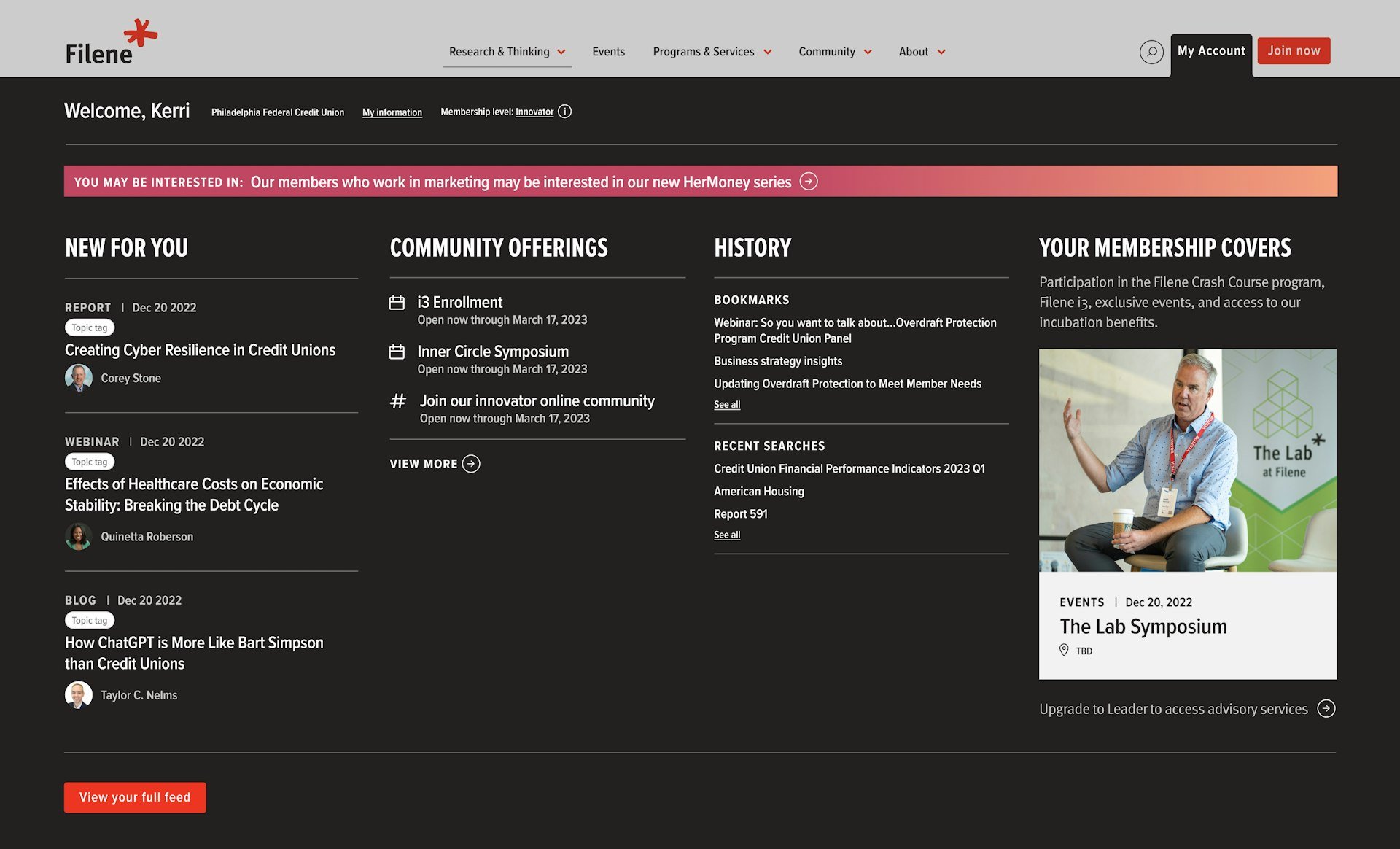
Our analytics team sets up Google Tag Manager on your Craft site, configures your consent platform so tags follow each visitor's choices, and builds the GA4 events your dashboards depend on. For Filene, our team set up GA4 on a Craft site that personalizes content by each visitor's declared interests, searches, clicks, and membership level.

06 · SEO and AI search
Search engines and AI assistants can find and cite your pages.
Every Craft site we build goes through our SEO team's audit of more than 100 technical factors that affect how search engines and AI assistants crawl, read, and cite a page, including schema, canonical tags, heading structure, and page speed. We give your editors SEO fields in Craft for titles, descriptions, and social images, often through the SEOmatic plugin, and set up redirect management your team can update from the control panel. We also check that AI assistants such as ChatGPT, Perplexity, Gemini, and Google's AI Overviews can reach the content you want them to cite.

07 · Multi-site, multilingual, and permissions
One Craft install can run several sites, languages, and teams.
Craft's multi-site feature runs each language, region, or brand as its own site from a single install, and editors translate content field by field while every site shares one content structure. Our team built a global, multilingual Craft site for Viewpoint. Craft's user groups and permissions control who can view, edit, and publish in each section, so a university's departments or a company's regional teams can share one site and publish within the workflow your organization sets.
08 · Security, training, and support
Your editors learn the site during the build, and our developers can stay on after launch.
Craft has a dedicated security team and a strong record of regular updates. On every Craft site we build, our developers add server-level protections (firewalls and public key authentication), encryption for sensitive data, and ongoing security audits and monitoring. Fortune 500 security teams have reviewed and approved our implementation practices. Your editors build pages with us throughout the project, so by launch they know every field, block, and workflow. As an Enterprise Verified Partner, our team has direct access to Craft's team. After launch, our developers can stay on for new features, Craft and plugin updates, and performance work, with an SLA if you want one and our analytics and SEO teams alongside them.